

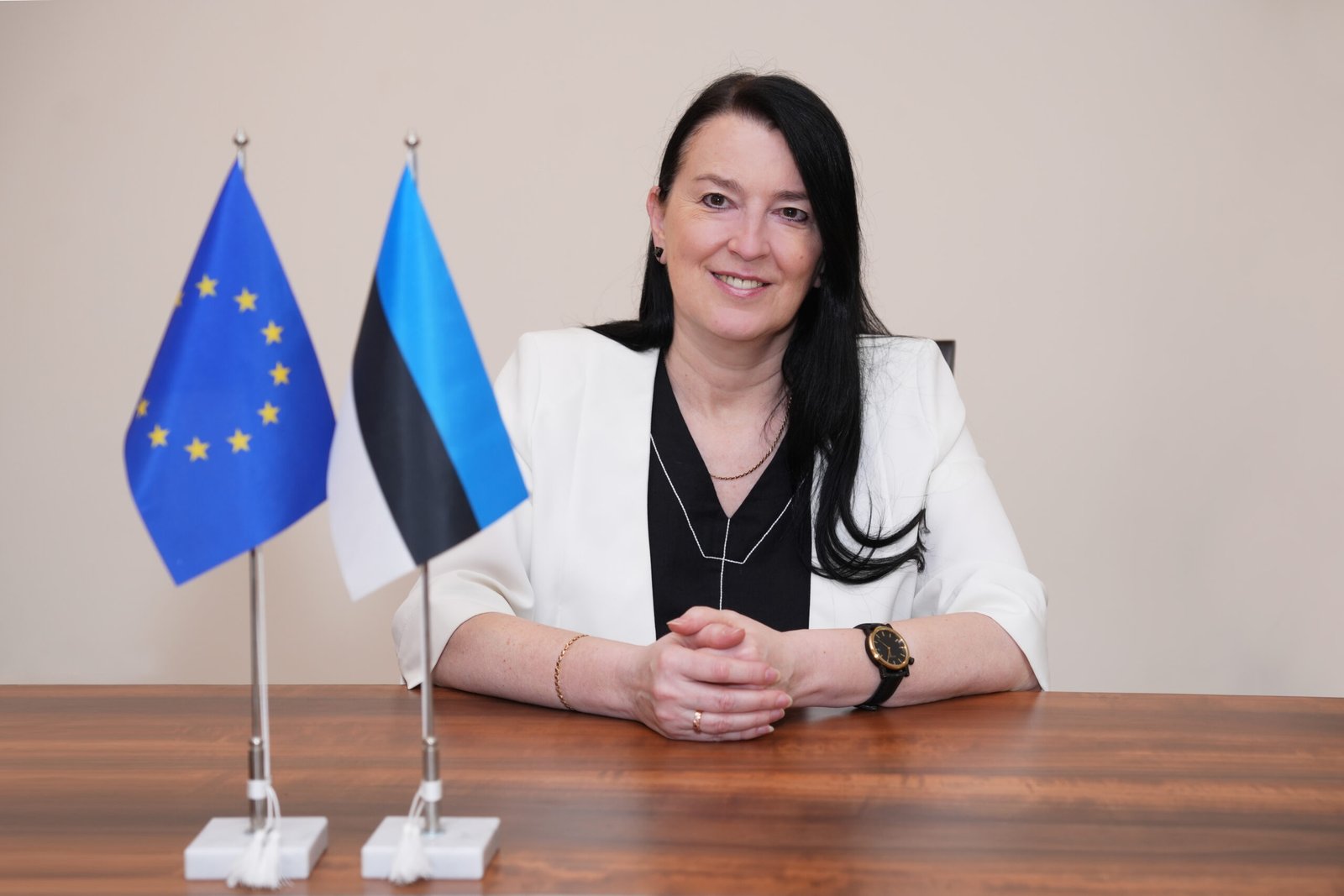
“Estonia represents more than just a European partner — it is a gateway to the EU and Nordic markets.”
Estonia is widely recognized for its digital economy and innovation. What key investment opportunities can Indian investors explore in Estonia today?
Estonia has emerged as one of the most attractive destinations in Europe for investors, particularly in technology-driven sectors. Its reputation as a digital pioneer stems from having all public services available online and an advanced cybersecurity ecosystem, which gives Indian companies a stable and innovative base to expand into the EU. Opportunities are especially strong in ICT, cybersecurity, and e-governance solutions, where Estonia is ranked among the global leaders. Green energy and clean tech are also priority areas, with Estonia heavily investing in green hydrogen, circular economy solutions, smart grids, and energy storage technologies. Indian companies can collaborate with Estonian startups to co-develop solutions aligned with India’s national missions like Digital India and the Hydrogen Mission. In addition, Estonia’s strengths in food and beverages — including dairy, plant-based alternatives, and premium beverages — create space for partnerships with Indian food businesses targeting niche markets. Logistics, maritime technologies, and timber-based construction materials present further synergies. Beyond the sectors themselves, Estonia’s investor-friendly policies, including 0% corporate tax on reinvested profits and seamless digital infrastructure, make it a cost-effective hub. For Indian firms, investing in Estonia is not only about Europe market access but also about joining a truly innovative ecosystem designed for growth.
How would you describe the current status of Estonia-India bilateral relations, and what areas are seeing the most active cooperation?
Estonia–India relations have steadily evolved into a strong and future-focused partnership since diplomatic ties were re-established in 1991. Both countries share common values of democracy, innovation, and a vision for technology-led development. Politically, the relationship has matured through high-level visits, the opening of embassies in Tallinn and New Delhi, and the appointment of resident ambassadors. Just in February 2026 the President of Estonia Mr. Alar Karis was visiting India and participating at the AI Summit in New Delhi.In July 2027, Estonia had the pleasure of hosting the Minister of Commerce and Industry of India, Mr. Piyush Goyal and a high-level business delegation. Economically, trade in goods and serviceshas grown significantly, reaching close to EUR206 million in 2025 and hopefully further rising in 2026. Key areas of trade include machinery, electrical equipment, chemicals, mineral fuels, and timber products. Indian companies like Reliance, Tata Consultancy Services, and HCL have already established a presence in Estonia, while Estonian exports to India are expanding into dairy, plant-based food, wood productsand renewable materials. The most dynamic cooperation is in technology and cybersecurity, where both nations have signed MoUs to strengthen collaboration. Estonia’s expertise in digital governance has influenced India’s Digital India program, and joint projects in AI, blockchain, and data centres are being explored. Cultural and academic exchanges are also growing, with Indian students in Estonian universities and Estonian festivals gaining recognition in India. In short, the bilateral relationship is vibrant, spanning trade, technology, education, and people-to-people ties, and is positioned for even deeper cooperation.
Estonia is home to several unicorn startups. What factors have enabled this success, and how can Indian entrepreneurs benefit from Estonia’s startup ecosystem?
Estonia’s startup success is remarkable given its small population, and it has been home to global unicorns like Skype, Wise (formerly Transferwise), and Bolt. Several factors explain this achievement. First, the country has built a world-class digital infrastructure — 100% of public services are online, and digital identity is universal. This has created a culture of innovation and trust in digital solutions. Second, Estonia has deliberately fostered a supportive business environment with simple regulations, transparent governance, and 0% corporate tax on reinvested profits, allowing startups to reinvest earnings into growth. Third, Estonia’s small domestic market has pushed entrepreneurs to think globally from day one, giving their startups a natural international orientation. The thriving ecosystem is further strengthened by tech talent, universities, and strong collaboration between government and private sectors. For Indian entrepreneurs, this environment offers multiple advantages. Through Estonia’s e-Residency and Startup Visa programs, Indian founders can establish EU-based companies remotely and tap into the single European market. Participation in events like the Latitude59 conference opens doors for networking, venture capital, and deep-tech collaboration. Essentially, Estonia offers Indian entrepreneurs a low-barrier entry to Europe, a collaborative environment for scaling ideas, and inspiration from a proven model of digital innovation.
Estonia offers e-Residency to global entrepreneurs. How have Indian businesspersons utilized this unique facility, and what advantages does it offer?
Estonia’s e-Residency program, launched in 2014, has become one of the country’s most innovative offerings to the world. For Indian entrepreneurs, it has proven especially useful. We have more than 4500 e-residents in India and more than 1,000 companies have already been founded by these Indian e-residents, making India one of the top user countries of the program. E-Residency allows businesspersons to establish and manage EU-based companies entirely online, without the need to relocate physically. This has been particularly attractive for Indian IT, consultancy, and start-up founders seeking seamless access to European clients and investors. The advantages are clear: simplified EU market entry, lower operational costs, digital tools for accounting and taxation, and credibility in the global business ecosystem. It also helps Indian entrepreneurs diversify beyond domestic markets by opening up international opportunities while maintaining operations from India. Coupled with Estonia’s transparent tax system and strong legal frameworks, e-Residency offers a safe and efficient environment to grow businesses. Beyond practical benefits, it symbolizes Estonia’s openness to global collaboration. For Indian businesses, it is both a gateway to Europe and a bridge for cross-border innovation, making it one of the most impactful digital programs linking Estonia and India.
What are some of the key Estonian festivals or cultural events that you believe would resonate with Indian audiences?
Cultural diplomacy has been a growing part of the Estonia–India relationship. Several Estonian festivals and cultural events have the potential to resonate strongly with Indian audiences. Estonia’s rich folk traditions, particularly its choral music and dance festivals, highlight its deep cultural heritage. The Song and Dance Celebration, held every five years in Tallinn, is one of the world’s largest amateur choral events and showcases the unity of Estonian culture — something that would appeal to India’s strong musical traditions.The Celebrations bring together more than 40 000 singers and dancers and the festival is included in the UNESCO Representative List of the Intangible Cultural Heritage of Humanity. On the contemporary side, technology-driven events like Latitude59, Estonia’s flagship start-up and innovation conference, attract global attention and align with India’s entrepreneurial energy. Similarly, events like the Tallinn Digital Summit offer platforms for cross-border collaborations in emerging technologies. From a cultural exchange perspective, Indian cultural activities are also celebrated in Estonia, such as International Yoga Day and Indian food festivals, which have become increasingly popular. These shared experiences show the appetite for deeper cultural understanding. For Indian audiences, Estonia offers a unique mix of tradition and modernity: folk heritage alongside cutting-edge innovation, which makes its festivals a natural bridge for greater people-to-people connection.
In terms of tourism, which Estonian destinations would you recommend to Indian travelers seeking a mix of history, nature, and modern experiences?
Estonia, though small, offers Indian travelers a remarkably diverse tourism experience that combines medieval history, unspoiled nature, and modern culture. Tallinn, the capital, is the starting point for many. Its UNESCO-listed Old Town, with cobbled streets and gothic architecture, transports visitors back to the Hanseatic era, while its vibrant cafés, museums, and tech-driven lifestyle reflect Estonia’s modern face. For those seeking nature, Estonia’s vast forests — covering over 50% of the country — offer hiking trails, wildlife experiences, and eco-tourism opportunities. On clear nights, the northern lights can be visible. The Baltic coastline and islands such as Saaremaa provide scenic beauty, spas, and unique maritime culture. Estonia is also famous for its sauna traditions, which appeal to wellness-seeking travelers. For cultural enthusiasts, festivals, folk events, and art galleries in Tallinn and Tartu (the second largest city of Estonia, which was the European Capital of Culture 2024) provide rich experiences. The country’s efficient transport, safety, and relatively affordable costs make it attractive to Indian tourists. Importantly, Estonia offers something distinctive: a blend of old medieval European charm with Nordic minimalism, set in a digitally advanced society. For Indians looking for destinations that combine history, nature, and modern lifestyle, Estonia is a hidden gem in Europe worth exploring.
What initiatives are in place to ease visa procedures for Indian tourists and travelers to Estonia?
Estonia and India have worked to gradually make travel easier for both business and tourism. On the diplomatic front, both countries signed a waiver for visa requirements for diplomatic passport holders, easing official exchanges. For businesspersons, Estonia’s Startup Visa program has opened a pathway for Indian entrepreneurs to establish and run innovative companies in Estonia after demonstrating their startup’s viability. The e-Residency program, though not a visa, complements this by allowing Indians to create and manage EU-based businesses entirely online. On tourism, Indian travelers can access Estonia through the Schengen visa framework, which provides entry into multiple European countries. Estonia has also actively participated in Indian trade events such as Vibrant Gujarat Summit and Bengaluru Tech Summit, highlighting opportunities for smoother people-to-people mobility. Furthermore, bilateral discussions have included ways to expand collaboration in consular services, student exchanges, and mobility for researchers. While more progress is possible, these measures already reflect Estonia’s intent to strengthen its profile as a welcoming destination for Indians, both for tourism and business travel. The long-term vision is to ensure hassle-free mobility, supporting greater exchanges in culture, commerce, and education.
What are some of the unique cultural collaborations that have taken place between Estonia and India recently?
Recent years have seen a steady rise in cultural and academic collaborations between India and Estonia. Estonian universities are hosting an increasing number of Indian students, particularly in STEM, biotechnology, and life sciences. These academic exchanges have fostered joint research, especially in molecular biology and sustainable technologies, building not only knowledge partnerships but also cultural understanding. On the cultural side, International Yoga Day has become a major event in Estonia, with widespread participation, reflecting the popularity of Indian traditions abroad. Indian food festivals organized in Tallinn have also gained traction, showcasing Indian cuisine while promoting people-to-people ties. Meanwhile, Estonian cultural exports, such as folk music ensembles and participation in India’s international forums, have provided Indian audiences with glimpses of Estonia’s heritage. Estonian musicians have found the way to the Indian music festivals like RIFF and Ziro festivals, well known Estonian nu-folk band Puuluup keeps coming back to India and the members of a band called Masala Cowboys are already getting recognised on the streets of Pushkar.Several Estonian films have participated lately in different Indian film festivals and very often Indian films are part of the program of the famous Estonian Black Nights A-category film festival (also known as PÖFF). Tech-driven events like Latitude59 and Tallinn Digital Summit have drawn Indian startups and investors, adding a modern dimension to cultural diplomacy by linking innovation communities. Together, these activities go beyond traditional diplomacy, creating shared experiences across education, food, music, and innovation. They underline the fact that cultural and academic exchanges are not peripheral but central to the Estonia–India partnership, deepening mutual trust and understanding for future cooperation.
Would you like to give any message to our Envoy Excellency readers?
The partnership between Estonia and India is built on shared values of democracy, innovation, and a forward-looking vision for the future. Despite differences in size and geography, both countries have demonstrated that collaboration based on trust and digital ambition can create global leadership opportunities. For Indian readers, Estonia represents more than just a European partner — it is a gateway to the EU and Nordic markets, a hub of digital innovation, and a nation eager to co-create solutions in fields like cybersecurity, green energy, biotechnology, and education. At the same time, India brings unmatched scale, talent, and market dynamism to the partnership, making the collaboration mutually rewarding. To businesses, students, and cultural enthusiasts alike, my message is simple: explore Estonia, engage with its opportunities, and be part of this evolving story of cooperation. Together, we can build a sustainable and innovative future that benefits not only our two nations but also contributes to global progress. Estonia sees India as a trusted partner, and the road ahead promises growth, innovation, and shared success.