

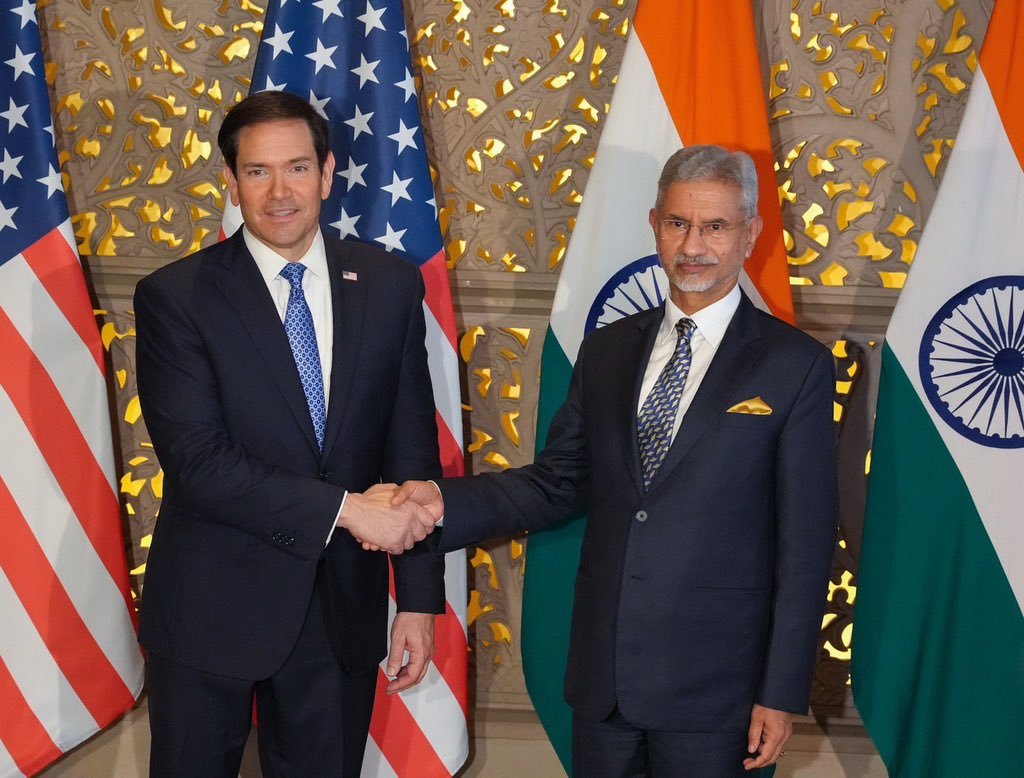
At the invitation of External Affairs Minister Dr. S. Jaishankar, U.S. Secretary of State Mr. Marco Rubio visited India from 20–21 October 2026. This was Secretary Rubio’s second visit to India. He previously visited New Delhi in May 2026.
External Affairs Minister Dr. S. Jaishankar held bilateral talks with US Secretary of State Marco Rubio in Mumbai, focusing on advancing the India-US strategic partnership and strengthening cooperation across key sectors, including trade, energy, technology and defence.
During the meeting, the two leaders exchanged views on regional and global developments, including the situation in the Middle East. Their discussions highlighted the importance of continued diplomatic engagement and cooperation on issues of mutual interest.
Energy cooperation emerged as an important area of discussion. Secretary Rubio highlighted the potential for increased energy trade between the United States and India to diversify India’s supply chains while meeting its growing energy requirements. Both countries continue to explore opportunities to expand energy cooperation and strengthen supply-chain resilience.
Defence and civil nuclear cooperation also featured in the discussions. Rubio welcomed recent progress in these areas and emphasised opportunities for greater cooperation involving US technologies and systems. The discussions reflected the continuing focus on strengthening defence ties and expanding technological collaboration between the two countries.
Following the meeting, Dr. Jaishankar highlighted trade, energy, technology, defence and people-to-people ties as key pillars of the bilateral engagement. Both sides also exchanged perspectives on regional developments, reaffirming the importance of maintaining regular communication on shared priorities.
The meeting forms part of ongoing high-level diplomatic engagement between New Delhi and Washington aimed at advancing their Comprehensive Global Strategic Partnership. Continued dialogue across economic, technological, energy and security sectors remains central to broadening cooperation and addressing shared regional and global challenges.