

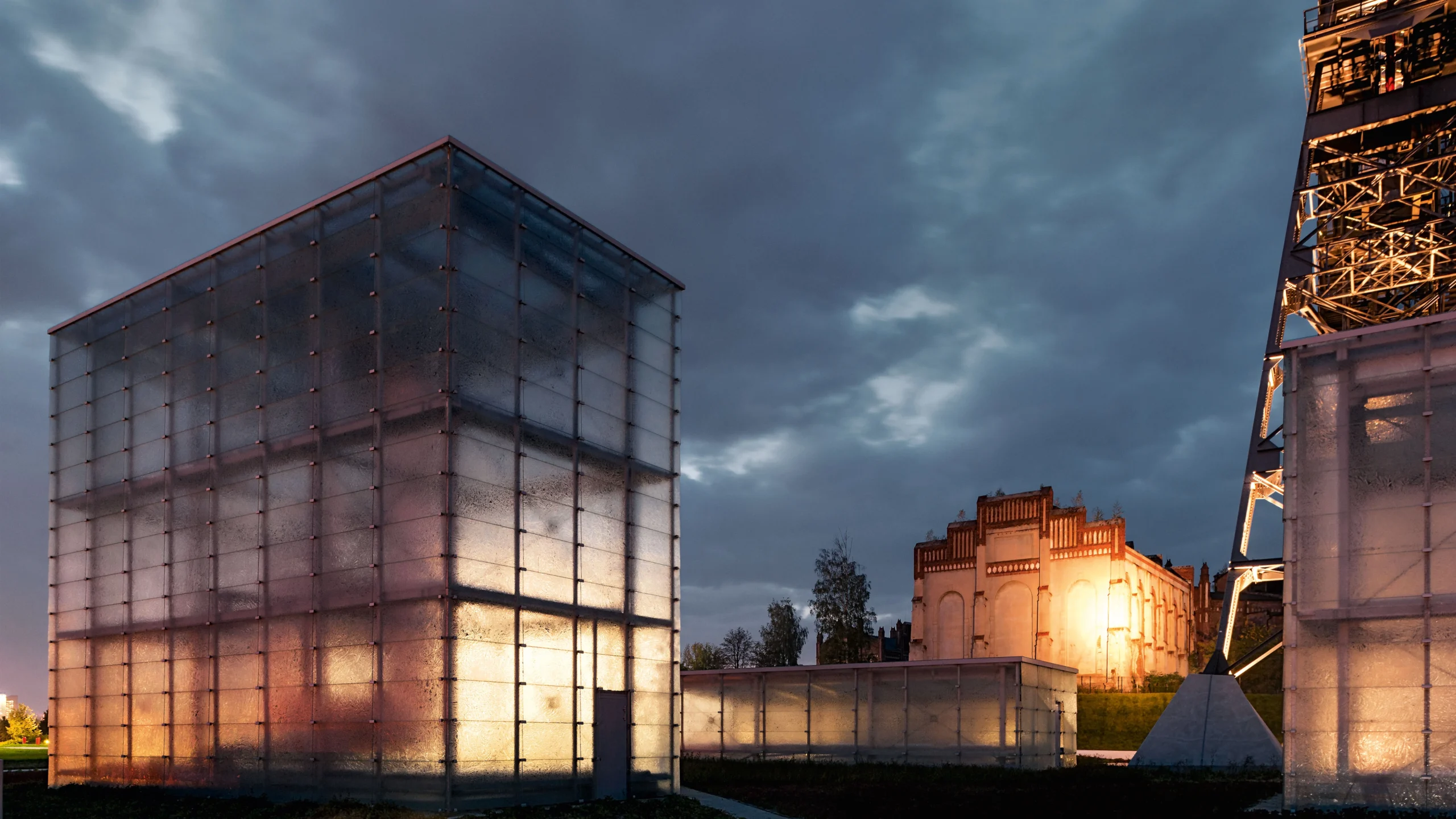
Poland has a long and important mining tradition, particularly in the southern region of Silesia. Mining has played a major role in the country’s industrial development, while former mines and mining landscapes have become valuable parts of Poland’s cultural identity. Today, Poland is combining its green transformation with the preservation and creative reuse of mining heritage. Historic mines are being converted into museums, underground tourist attractions, cultural centres, educational spaces and areas for new economic activities. This approach connects environmental transformation with culture, tourism, education and regional development.
Silesia is at the heart of this transformation. It is one of Europe’s most important historic mining regions and has a population of more than 4.4 million people. The region has a particularly strong industrial and cultural identity, with mining traditions influencing its towns, architecture, communities and local heritage. According to the European Committee of the Regions, Silesia is the largest beneficiary of the European Union’s Just Transition Fund and has more than 74,000 miners, representing around 43% of all miners in the European Union. Around 400,000 additional people are connected with mining-related supply chains. These figures demonstrate the enormous scale of the region’s industrial heritage and explain why the transformation of former mining areas is an important part of Poland’s long-term regional development.
The European Union’s Just Transition Fund is an important part of this transformation. The fund has a total EU budget of approximately €19.2 billion, and Poland receives the largest national allocation. Five Polish coal regions have been allocated approximately €3.85 billion from the Just Transition Fund for the 2021–2027 period. The funding supports activities such as economic diversification, environmental improvement, skills development, innovation, regeneration of post-industrial areas, culture and tourism. This provides Poland with an opportunity to transform historic industrial landscapes while creating modern uses for them.
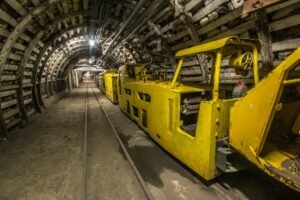
One of the most impressive examples is the Guido Coal Mine in Zabrze. Guido represents an important part of Poland’s mining heritage and today functions as an underground museum and cultural attraction. The historic complex includes underground levels at approximately 170 and 320 metres below ground. The 320-metre level is particularly significant because visitors can experience the underground mining environment and see historic machinery and mining infrastructure in their original setting. The historical complex in Zabrze contains extensive underground workings and preserved technical infrastructure representing more than two centuries of mining development. In 2025, Poland submitted the Historical Coal-Mining Complex in Zabrze to UNESCO’s Tentative List, highlighting its international cultural importance.
The wider Coal Mining Museum in Zabrze demonstrates how an old industrial area can be given a completely new cultural purpose. The museum today combines the Guido Mine and the Queen Louise Adit, along with several other heritage locations. According to the museum, its activities cover scientific, cultural, educational and tourism objectives and focus on the preservation, revitalisation and adaptation of industrial heritage for sustainable regional development. It includes underground tours, cultural facilities, a historic underground chapel and more than 30 mining-related sites across four locations in Zabrze.
Another outstanding example is the Tarnowskie Góry Lead-Silver-Zinc Mine and its Underground Water Management System, which was added to the UNESCO World Heritage List in 2017. The site represents around 300 years of mining and hydraulic engineering development. Its underground water-management network is particularly impressive: the historic system included more than 50 kilometres of main drainage tunnels and around 150 kilometres of secondary drainage adits, access tunnels, shafts and extraction areas. This makes Tarnowskie Góry one of the most important surviving examples of historic underground mining and water-management engineering in Europe.
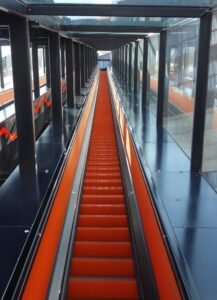
The Tarnowskie Góry example is especially valuable because it demonstrates that mining heritage is not limited to machinery or buildings. It also includes engineering knowledge, water management, geology and the relationship between people and the natural environment. Visitors can learn how earlier generations developed sophisticated systems to manage underground water while extracting valuable minerals. In this way, an historic mining site becomes an educational centre for both cultural heritage and engineering.
The transformation of former mining areas also extends beyond traditional museums. In Katowice, parts of the former Wieczorek coal mine have been connected with new technology, research and innovation activities. The European Union has identified projects in Silesia involving technology and gaming, green-economy development, biotechnology, biodiversity and research. This shows how former industrial areas can support modern knowledge-based activities while maintaining connections with their industrial past.
Culture is another important element of this transformation. Former industrial buildings can become spaces for exhibitions, performances, conferences, festivals and community activities. This creates a bridge between Poland’s industrial past and its contemporary cultural life. Rather than treating mining heritage simply as something from history, these projects allow former mining spaces to remain active and useful parts of local communities.
The economic value of this approach can also be seen in recent regional funding. In Silesia, a 2025 funding programme for the reuse of post-industrial and degraded areas selected 11 projects for more than PLN 114.3 million in funding. The supported projects include the revitalisation and adaptation of former mining areas such as the Julian III shaft, Franciszek shaft, Rozbark area in Bytom, the former Mysłowice mine, Saturn Mine in Czeladź and areas associated with the former Ziemowit mine. These investments demonstrate how industrial land can be transformed into new spaces for communities, tourism, business and sustainable development.
The scale of the Just Transition programme in Poland is also significant. By November 2025, more than 2,000 agreements had been signed under Poland’s Just Transition Fund, representing approximately PLN 9.7 billion in EU funding. The projects support new businesses and economic activities, regeneration of post-industrial and post-mining areas, employee training and the development of green spaces. This demonstrates that green transformation is being supported through concrete investments rather than being limited to policy objectives.
Mining heritage can therefore become an important foundation for sustainable tourism. Underground museums offer visitors experiences that cannot easily be recreated elsewhere. They allow people to travel through historic tunnels, see original machinery and understand the working environment of previous generations. This creates demand for guides, hospitality, restaurants, transport and local tourism services, helping connect cultural heritage with the wider regional economy.
The transformation also has an important educational dimension. Former mines can teach students and visitors about geology, engineering, industrial history, architecture, environmental management and technological development. Digitalisation is adding another dimension to this process. The Coal Mining Museum in Zabrze operates a documentation centre and a modern digitisation laboratory, allowing mining heritage to be preserved and presented using contemporary technologies.