


Energy & Green Transition
Poland’s energy transition is opening opportunities in renewable power, nuclear energy, electricity-grid modernisation, hydrogen, energy storage and clean technologies. Energy and green technologies are explicitly identified as priority areas under the India–Poland Strategic Partnership Action Plan 2024–2028. The same framework calls for cooperation in environmentally friendly technologies, while the two countries have also maintained an institutional MoU on cooperation in coal and mining, covering mining technology, equipment, expertise and training.
There is a practical India–Poland technology link through Coal India Limited, whose personnel have received exposure to Polish intelligent-mining technologies. The relationship is now expanding towards renewable energy, e-mobility and green hydrogen. At the 7th India–Poland Joint Commission for Economic Cooperation (JCEC) in July 2026, these areas were identified among the sectors for greater commercial cooperation.
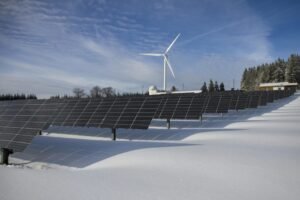
Poland’s nuclear programme also creates opportunities for Indian engineering, construction, electrical-equipment and specialist technology companies. The country’s first nuclear power plant is planned at Lubiatowo-Kopalino with three AP1000 reactors. Indian companies with experience in large infrastructure, power engineering and specialised manufacturing could potentially participate through European supply chains and local partnerships.
Manufacturing & Automation
Indian investment in Polish manufacturing is already represented by companies such as Jindal Stainless, Arcelor Mittal, Uflex, Essel Propack, Berger Paints, Rishab Instruments/ Lumel, Escorts and Videocon. Indian investments in Poland are valued at more than US$3 billion by the Embassy of India, while Poland’s National Bank values the stock at more than PLN 1.8 billion.
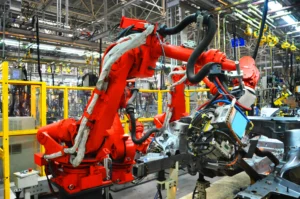
Rishab Instruments’ acquisition of Lumel, a Polish manufacturer of industrial measurement and control equipment, is particularly relevant to India’s industrial-technology ambitions because it gave an Indian company an established Polish manufacturing and technology platform. Essel Propack operates a laminated-tube factory in Kętrzyn, while Novo Tech manufactures polymer products in the same town and VVF operates a soap factory in Racibórz. These investments demonstrate Indian participation in Poland’s manufacturing ecosystem beyond IT. The next opportunity is smart manufacturing and automation—robotics, industrial AI, precision engineering, connected factories and digital production systems. The 2026 JCEC specifically emphasised investment, technology and knowledge exchange, joint research and closer business-to-business cooperation.
Defence
Defence cooperation is moving towards industrial and technological engagement. The 2024–2028 India–Poland Action Plan calls for stronger contacts between the two countries’ defence industries and cooperation on military-equipment modernisation. In September 2026, the Polish and Indian foreign ministers again identified defence industries and new technologies, including space technologies, as areas with particular potential.

For companies, the opportunity extends beyond traditional platforms into defence electronics, drones, radar, secure communications, cybersecurity, autonomous systems, maintenance and advanced components. Poland’s expanding defence-industrial base could provide Indian manufacturers with access to European supply chains, while Indian companies bring cost-competitive manufacturing and technology capabilities.
The institutional framework is becoming more business-oriented. The 7th JCEC in July 2026 brought Polish and Indian companies together through meetings and roundtables organised with CII and ASSOCHAM, providing a platform for defence and other industrial sectors to explore partnerships.
IT, Software & Digital Technologies
Indian IT companies have established one of the strongest Indian corporate footprints in Poland. Tata Consultancy Services (TCS), Infosys, HCL Technologies and Wipro have major operations, while KPIT, Zensar Technologies, L&T Technology Services and Genpact are also active. The Indian Embassy estimates that around 13 Indian IT companies employ more than 10,000 professionals in Poland.
The sector is now moving towards AI, 5G, cybersecurity, cloud computing and advanced telecommunications. During the 2026 JCEC, India and Poland agreed to explore cooperation in 5G use cases, emerging technologies, AI in telecommunications, digital connectivity, Smart Village applications and the trade and manufacture of telecommunications equipment.

A particularly concrete development came during the AI Impact Summit in New Delhi in February 2026, when the Regional Chamber of Commerce in Katowice and Karnataka’s Department of Electronics, Information Technology, Biotechnology and Science & Technology signed a Letter of Intent establishing the basis for a structured, long-term innovation partnership.
The agreement creates a direct institutional bridge between a major Polish industrial region and India’s leading technology state. The existing corporate presence gives this cooperation a strong commercial base: Indian IT companies can use Poland as a European delivery, R&D and near-shoring centre, while Polish technology companies can use Indian partnerships to access India’s large digital market.
Pharmaceuticals & Healthcare
Indian pharmaceutical investment in Poland includes Glenmark Pharmaceuticals, Ranbaxy, Strides Arcolab and MSN Laboratories. The Embassy of India also lists Lambda Therapeutic Research among Indian companies that entered the Polish market through acquisitions. Indian exports to Poland include significant volumes of pharmaceutical and chemical products, while pharmaceuticals form an important component of Poland’s exports to India as well.

Healthcare and pharmaceuticals are specifically included in the 2024–2028 Strategic Partnership Action Plan, creating scope for cooperation in medicines, medical technology, research and healthcare institutions. At the 2026 JCEC, pharmaceuticals and medical devices were again identified as areas for stronger commercial engagement. For Indian companies, opportunities include generic medicines, pharmaceutical ingredients, biotechnology, medical devices, clinical research and affordable healthcare technologies. Existing Indian investments provide a platform for additional companies to establish manufacturing, distribution or R&D operations serving Poland and the wider European market.
Mining & Critical Minerals
Mining cooperation has one of the clearest formal foundations in the bilateral relationship. The India–Poland MoU on cooperation in coal and mining, signed in 2019, provides for exchanges of technology, technical expertise, equipment and training. The relationship has included cooperation involving Indian coal-sector personnel and Polish intelligent-mining practices.

The focus is now broadening from conventional coal mining towards advanced mining systems, automation, mining safety, high-tech machinery and critical minerals. These areas were incorporated into the India–Poland cooperation framework, creating opportunities for Indian engineering and mining-equipment companies. Indian firms specialising in industrial machinery, sensors, automation, underground equipment and mine-safety systems could therefore explore Polish partnerships, particularly as both countries seek to modernise industrial production and develop technologies relevant to the energy transition.
Tourism & Hospitality
Tourism cooperation is included in the 2024–2028 Action Plan, which calls for greater tourist flows through tourism missions, travel-industry familiarisation programmes, tourism fairs and roadshows. The opportunity is relevant to Indian travel companies, hotel groups and digital tourism platforms looking to expand into Central Europe.
There is also a substantial cultural and commercial ecosystem supporting tourism. Poland has more than 100 Indian restaurants, while interest in Indian culture, yoga, dance and Bollywood provides an existing base for Indian-themed cultural tourism and hospitality. For Polish tourism companies, India’s rapidly expanding outbound tourism market offers opportunities to package Poland around heritage, wellness, business events, winter tourism and European multi-country itineraries. For Indian companies, Poland can serve as both a destination and a base for wider Central European travel products.
Trade, Companies & Business Agreements
India–Poland bilateral trade reached €5.681 billion in 2025, compared with €5.357 billion in 2024. Polish exports to India were €1.366 billion, while imports from India reached €4.315 billion. India’s main exports include textiles, machinery and electrical equipment, base metals, chemicals and pharmaceuticals, while Poland’s exports include machinery, mineral products, metals, rubber and chemicals.
The Indian corporate footprint covers IT, steel, manufacturing, pharmaceuticals, packaging, engineering and consumer products. Alongside TCS, Infosys, HCL and Wipro, major investors include Arcelor Mittal, Jindal Stainless, Uflex, Essel Propack, Berger Paints, Glenmark Pharmaceuticals and Rishab Instruments/Lumel.

The 7th JCEC, held in New Delhi on 14 July 2026, produced a concrete business-level outcome: ASSOCHAM and the Chamber of Commerce and Industry in Katowice (RIG Katowice) signed an MoU to strengthen institutional links between Polish and Indian businesses. The accompanying programme brought companies together through CII and ASSOCHAM roundtables, with emphasis on trade, investment, technology, innovation and business-to-business cooperation.
The relationship also gained a technology-focused business mechanism through the February 2026 Letter of Intent between RIG Katowice and Karnataka’s Department of Electronics, IT, Biotechnology and Science & Technology, signed on the margins of the AI Impact Summit. It establishes a foundation for long-term cooperation between Poland’s Katowice industrial region and India’s Karnataka technology ecosystem.
The EU–India Free Trade Agreement, concluded in January 2026, adds another commercial dimension. The European Commission says the agreement will eliminate or reduce tariffs on 96.6% of EU goods exports to India, with Polish exports to India valued at €1.366 billion in goods in 2025. This is particularly relevant for Polish machinery, industrial equipment, chemicals, metals and agri-food exporters seeking greater access to the Indian market.