

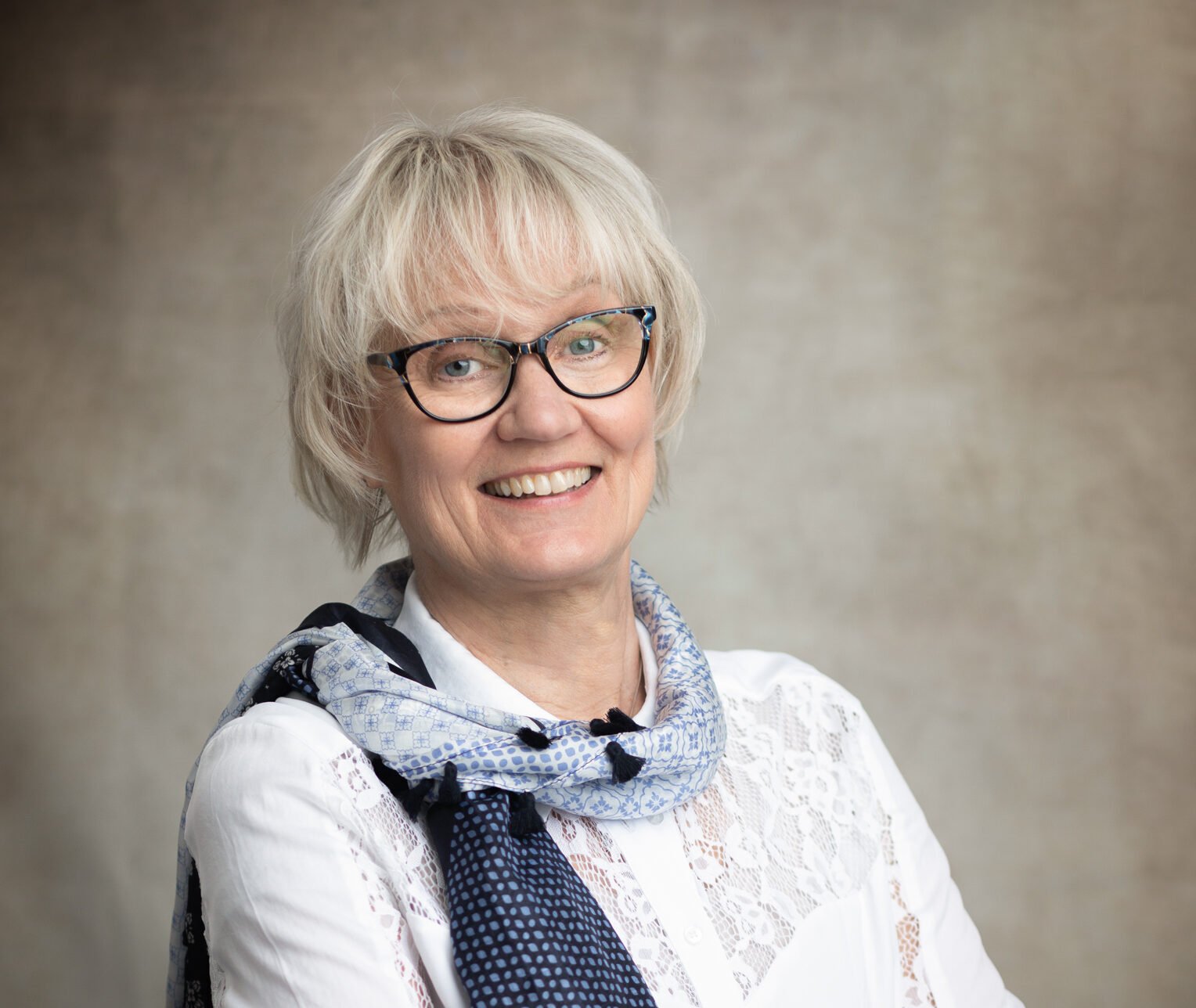
“We are not simply producing PCBs. We are helping build the
technologies and products that will shape the future.”
Please give us an overview of Brandner Electronics and its role within Polymatech’s 2032 vision.
Brandner Electronics ÖÜ is Polymatech’s European centre for the manufacture and development of advanced printed circuit boards. Our facility in Paide, Estonia, combines an experienced workforce, established manufacturing knowledge and access to Europe’s technology and innovation ecosystem.
Polymatech’s 2032 vision is to build a globally integrated advanced-electronics enterprise with capabilities extending from semiconductor components and printed circuit boards to finished electronic products. Brandner has an important role in this vision because the PCB is the technological foundation connecting semiconductors, memory, displays, sensors and other components within every electronic system.
Our objective is there for e not merely to manufacture PCBs, but to develop Brandner into a world-class European source for high-reliability, high-density and application-specific printed circuit boards.
What drove Polymatech’s decision to invest in Estonia?
Estonia offers a distinctive combination of engineering capability, digital sophistication, a highly skilled workforce and access to the European Union market. Paide also provided us with an existing industrial foundation and people possessing valuable PCB-manufacturing experience.
By investing in Estonia, Polymatech is creating a secure European manufacturing base that can serve customers across Europe, Asia and North America. It enables shorter lead times, closer engineering cooperation and greater supply-chain resilience.
The investment also reflects a broader India–Estonia industrial partnership. It brings together India’s scale, semiconductor ambitions and growing electronics market with Estonia’s engineering talent, innovation culture and access to the European technology ecosystem.
What are the facility’s present manufacturing capabilities?
The Paide facility produces high-reliability multilayer and high-density interconnect PCBs, with capability extending to 48 layers. That places Brandner among a small group of manufacturers able to build architectures of this complexity, and it is matched by strict control over registration, impedance, material performance, traceability and repeatability.
Annual production capacity currently stands at approximately 25,000 square metres. Equipment has already been ordered to take the facility towards 50,000 square metres, and we continue to strengthen capability through advanced direct-imaging, process-control, inspection and automation technologies.
Under our phased roadmap, we are moving towards progressively finer features, more advanced HDI structures, embedded components, specialised high-frequency materials and substrate-like PCBs. Each capability is introduced only after the required processes have been technically qualified and proven for consistent production.
How will Brandner contribute to Polymatech’s own products?
The Paide facility is being developed to serve two demands at once: independent customers across Europe and international markets, and captive consumption within the Polymatech group. Both are central to how we are building the business.
On the captive side, one of Brandner’s most important roles will be to manufacture PCBs for the group’s own computing and mobile products, which will carry Polymatech’s product brand, NANORAA. Products of this kind call for compact, high-density and reliable board architectures capable of supporting processors, memory, connectivity, power management, displays and other advanced components.
Developing these PCBs within the group allows product engineering and PCB manufacturing teams to work closely from the design stage. This shortens development cycles, improves design-for-manufacturing, strengthens quality control and reduces dependence on distant supply chains.
They will also serve as important anchor applications for Brandner, giving us recurring production requirements and a practical platform through which we can continually improve our HDI, fine-line, thermal-management and high-speed signal capabilities.
The two sides reinforce one another. Disciplines developed throughout our own products strengthen what we offer external customers, while the demands of independent customers keep our processes benchmarked against the wider industry.
What will distinguish Brandner’s PCBs in the global marketplace?
Our differentiation will come from the combination of European manufacturing, advanced engineering, vertical integration and application-specific development.
We are not seeking to compete only on volume. Our focus is on products where reliability, precision, traceability and supply-chain security are critical. These include telecommunications, automotive electronics, medical equipment, industrial systems, defence, aerospace, computing and semiconductor-related applications.
As part of the Polymatech ecosystem, Brandner can collaborate with teams working on semiconductor devices, memory modules, optoelectronics, medical electronics, mobile phones and computing products. This gives us an understanding of the complete electronic system — not only the PCB in isolation.
Our customers will benefit from responsive engineering support, faster prototyping, controlled manufacturing processes and the ability to develop customised PCB solutions around their applications.
How does Brandner strengthen the electronics supply chain between Estonia, India and the wider world?
Brandner creates an important manufacturing and technological bridge between Europe and India.
The Estonia facility gives Polymatech a European base for PCB engineering and production, while Polymatech’s operations in India and other international locations provide access to semiconductor, component and finished-product capabilities.
This integrated model allows the group to coordinate product design, component selection, PCB development, manufacturing and final-system integration across different locations. It creates a more resilient alternative to supply chains that depend heavily on a single geography.
For customers, this means greater sourcing security, closer technical cooperation and access to a manufacturing network capable of supporting products from their initial design through commercial production.
How is environmental responsibility being incorporated into the facility?
Sustainability is integral to our development of the Paide facility. PCB production involves energy, water, metals and specialised chemicals, so responsible manufacturing must be built into every stage of the process.
We are progressively investing in energy-efficient production systems, responsible chemical management, water conservation, effluent treatment and material-recovery practices. We also expect our suppliers and technology partners to maintain high environmental and ethical standards.
Operating in Estonia and within the European Union provides a strong regulatory framework. Our ambition, however, is to go beyond compliance by continuously reducing resource consumption and waste as we modernize and expand the facility.
What is Brandner’s roadmap towards 2032?
Our roadmap is built around four priorities: capability, scale, integration and innovation.
First, we will consolidate and expand our multilayer and HDI production, supported by the capacity expansion now under way. Second, we will introduce progressively more advanced processes for fine-line PCBs, high-speed and high-frequency applications, embedded components and substrate-like architectures.
Third, Brandner will become increasingly integrated with Polymatech’s global product development programmes. This includes supplying PCBs for the group’s own computing and mobile products, as well as supporting medical, telecommunications, industrial and other advanced-electronics products developed by the group.
Fourth, we intend to strengthen research and development in Estonia through cooperation with universities, technology partners, material suppliers and equipment specialists.
By 2032, our ambition is for Brandner Electronics to be recognized as a world-class European PCB manufacturer — one that combines advanced manufacturing, dependable quality, sustainable operations and close engagement with customers.
What message would you like to share with customers, partners and stakeholders?
Brandner Electronics is building for the long term. We are combining Estonia’s engineering strengths with Polymatech’s global manufacturing vision to create an advanced and resilient PCB platform in Europe.
We welcome customers and partners who value quality, innovation, transparency and long-term cooperation. Whether the requirement is for an advanced medical product, an industrial system, a telecommunications platform or a next-generation computing device, our purpose remains the same: to manufacture the reliable electronic foundation on which the complete product depends.
We are not simply producing PCBs. We are helping build the technologies and products that will shape the future.