

Manpower
Guyana is experiencing one of the fastest economic expansions globally, having grown at an average of 40% per annum over the last 5 years, driven by the rapid growth of offshore oil production, infrastructure development, agriculture, mining, and services. According to recent official estimates, the economy is projected to grow by over 16 percent in 2026and 22 percent in 2027, while the non-oil economy will continue to expand strongly by 9-10 percent annually. This rapid growth has created increasing demand for engineers, welders, geologists, ICT professionals, accountants, project managers, healthcare workers, and construction specialists. Guyana’s Local Content legislation has also increased demand for skilled labour and training institutions.

India and Guyana share deep historical and cultural ties, with a large Indo-Guyanese population contributing to strong people-to-people connections. Indian enterprises can support manpower development through vocational institutes, nursing schools, IT training centres, and technical partnerships in oil and gas operations, construction, and healthcare. Indian companies such as Aptech and skill-development institutions can find opportunities in digital education and workforce training.
Agriculture
Agriculture remains a major pillar of Guyana’s non-oil economy and is central to employment, exports, and food security. Guyana offers more than 200,000 hectares of arable land and abundant freshwater resources for year-round cultivation. In 2025, the Government allocated approximately G$104.6 billion to strengthen agriculture and G$13.3 billion for the revival of the sugar industry. Guyana is leading the CARICOM initiative to reduce the region’s US$6 billion food import bill by 25 percent by 2030.

The country is a major exporter of rice, with rice exports generating around US$254 million. Other high-potential segments include sugar, corn, soya, coconuts, fisheries, poultry, dairy, fruits, and vegetables. There are opportunities for Indian agri-tech firms in irrigation, farm mechanisation, fertilisers, hybrid seeds, food processing, and cold-chain logistics. Companies such as IFFCO and Indian agro-processing firms can leverage Guyana as a supply base for Caribbean and wider regional markets.
Energy
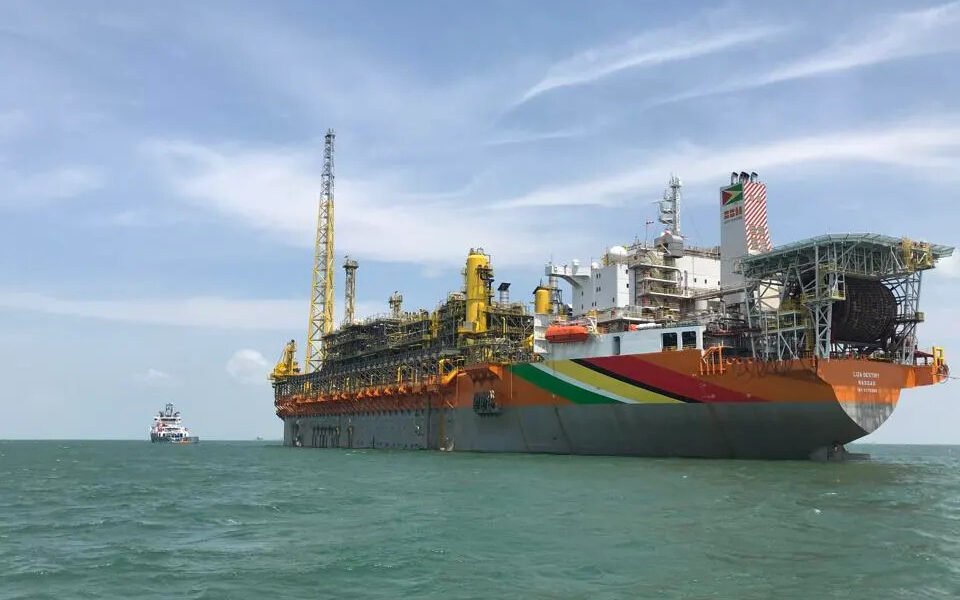
The energy sector is the strongest driver of Guyana’s transformation. Guyana is now among the world’s fastest-growing oil producers. Official projections indicate oil output could reach 786,000 barrels per day by late 2025, rising to 1.3 million barrels per day by 2027. Offshore reserves in the Stabroek Block are being developed by major international players including ExxonMobil, Chevron, and CNOOC, with several new international operators acquiring blocks for exploration within the last few years.
The Government has allocated around G$88 billion for energy in 2025 and is advancing the Gas-to-Energy Project, expected to cut electricity costs by 50 percent and support industrialization. It will also support an natural gas liquid (NGL) processing plant and an ammonia production facility. This creates opportunities in offshore logistics, pipelines, marine services, engineering, fabrication, and storage facilities. India and Guyana are strengthening energy cooperation, with Indian refiners such as Indian Oil Corporation and Bharat Petroleum exploring crude procurement and partnerships. Renewable energy opportunities also exist in solar, hydropower, biomass, and wind.
Forestry
Guyana has one of the highest forest-cover ratios in the world, with approximately 18 million hectares, or over 80 percent of its land area under forest cover. The country has earned global recognition for environmental stewardship and monetization of forest conservation through carbon markets. Guyana has already earned approximately US$237.5 million from carbon credit sales, with projected inflows of G$41.1 billion.

The forestry sector employs about 22,500 people, while timber production reached approximately 441,500 cubic metres in 2022. Investment opportunities include sustainable timber harvesting, plywood, engineered wood, furniture manufacturing, paper products, and eco-friendly packaging. Indian companies in furniture and wood processing can benefit from Guyana’s hardwood resources, while green-finance firms can explore carbon-credit partnerships and sustainability-linked investments.
Manufacturing
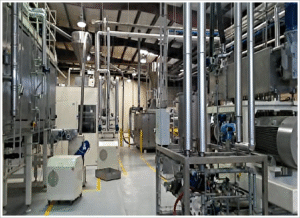
Manufacturing is a growing pillar of economic diversification in Guyana. The sector contributes around 5.1 percent of non-oil GDP and employs approximately 12 percent of the population. Manufacturing output has shown strong growth, and the Guyana Office for Investment (Go Invest) projects continued expansion supported by cheaper electricity and infrastructure development.
Guyana’s location offers strategic access to Caribbean and South American markets, with about 75 percent of exports enjoying duty-free access under trade arrangements. Key opportunities include agro-processing, pharmaceuticals, chemicals, packaging, building materials, cement, beverages, and consumer goods. The Government expects the country to become a regional manufacturing hub after the completion of the Gas-to-Energy Project. Indian firms in pharmaceuticals such as Cipla and Sun Pharmaceutical can expand regional distribution through Guyana.
Mining
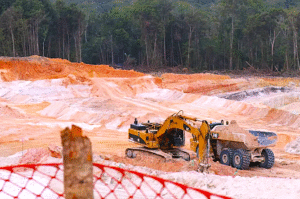
Mining has long been a pillar of Guyana’s economy and remains highly attractive. The country is rich in gold, bauxite, diamonds, silica quartz, and other industrial minerals. Official projections target approximately 501,000 ounces of gold production, while the bauxite sector has attracted over US$115 million in investment.
Companies such as Bosai Minerals Group are active in bauxite operations. Opportunities exist in mineral exploration, mining equipment, heavy machinery, logistics, mineral processing, and downstream industries such as aluminium products and glass production. Indian companies with expertise in mining technology, exploration services, and aluminium manufacturing such as Vedanta Limited and NALCO may find strong opportunities in Guyana’s mining landscape.
Services
The services sector is expanding rapidly due to rising incomes, urbanisation, and business activity. It grew by around 10 percent in 2023 and was projected to grow by 7.7 percent in 2024. Key segments include banking, insurance, healthcare, education, ICT, logistics, tourism, hospitality, and oilfield support services.
India’s strengths in healthcare, education, software services, and fintech align strongly with Guyana’s needs. Indian-linked institutions, including medical schools and business-service firms, already operate in Guyana. Opportunities exist for hospital chains such as Apollo Hospitals, IT firms such as Infosys and Tata Consultancy Services, and logistics companies seeking to support the booming oil and construction sectors.
Bilateral trade between India and Guyana reached approximately US$105.97 million in 2023–24, and this figure is expected to rise with stronger commercial partnerships. With rapid GDP growth, pro-business policies, strategic geographic access to the Caribbean and South America, and strong historical ties with India, Guyana offers significant opportunities across manpower, agriculture, energy, forestry, manufacturing, mining, and services.