

- India and Baku Explore a New Pathway for Bilateral Relations
India’s External Affairs Minister Dr. S. Jaishankar’s visit to Azerbaijan marked an important step in renewed diplomatic engagement between New Delhi and Baku, with discussions focusing on strengthening bilateral relations, expanding economic cooperation, enhancing connectivity and addressing shared regional and global challenges.
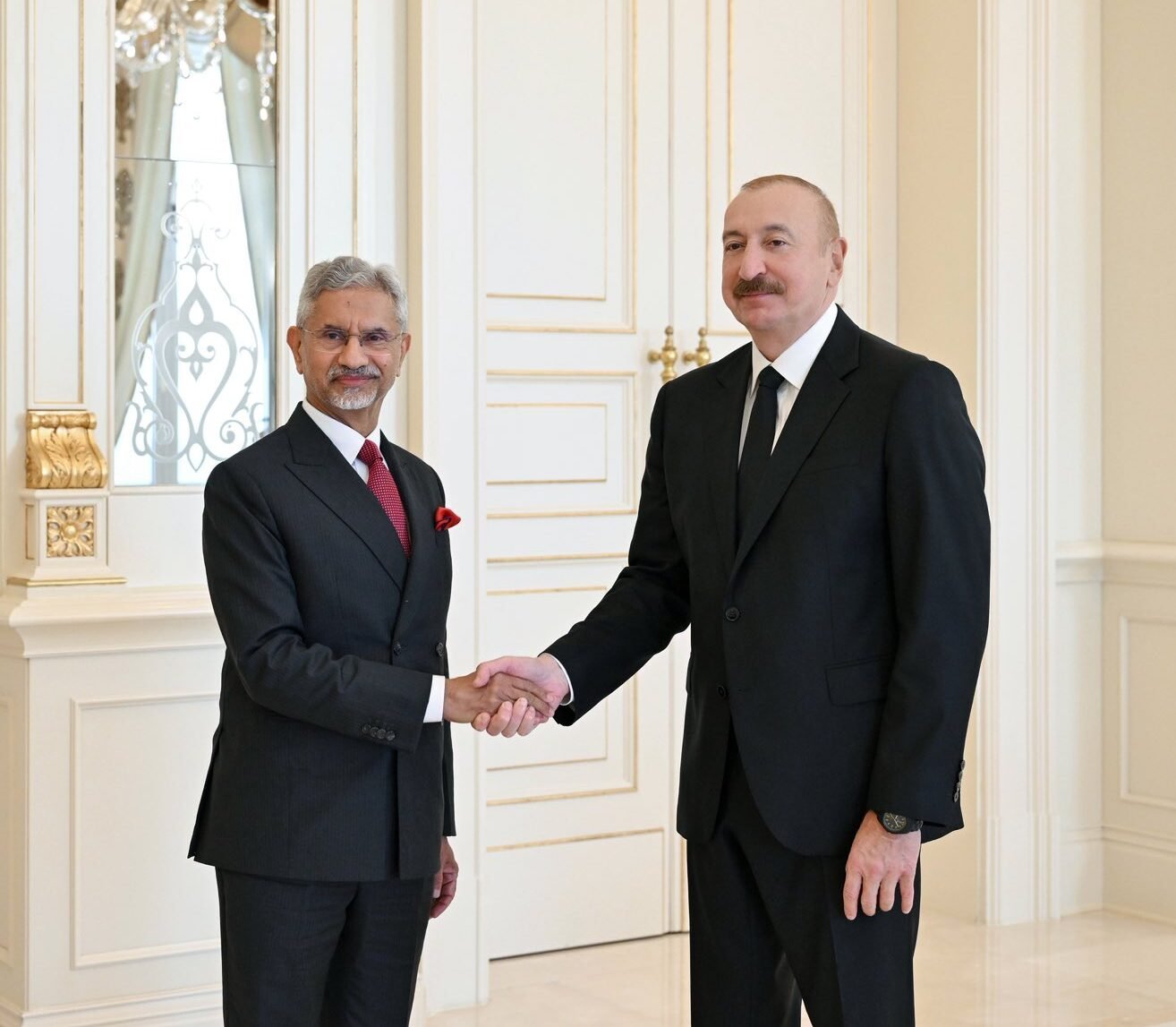
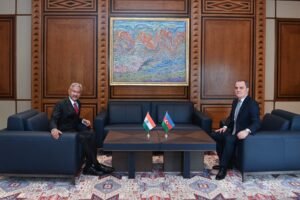
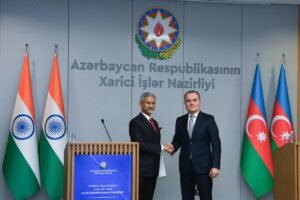
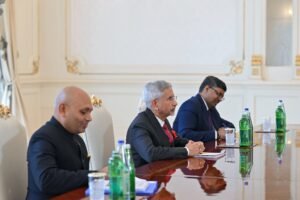
During the visit, Dr. Jaishankar called on Azerbaijani President Ilham Aliyev and held discussions with Foreign Minister Jeyhun Bayramov. The meetings reviewed the current state of bilateral relations and explored opportunities to advance cooperation across political, economic, energy, technological and cultural sectors.

The visit also reflected a broader effort to translate renewed high-level political engagement into practical cooperation, building on the interaction between Prime Minister Narendra Modi and President Aliyev on the sidelines of the Shanghai Cooperation Organisation (SCO) Summit in Bishkek in September 2026.
Key Highlights of the Visit
- High-Level Diplomatic Engagement
Dr. Jaishankar’s meeting with President Ilham Aliyev provided an opportunity to review bilateral relations and identify areas for future collaboration. Both sides discussed political engagement, trade and economic cooperation, high technology, culture, humanitarian exchanges and coordination in international organisations.
In his meeting with Foreign Minister Jeyhun Bayramov, Dr. Jaishankar described the discussions as productive and forward-looking. The two ministers agreed on the importance of deeper political consultations, reciprocal visits, stronger economic engagement and closer people-to-people connections.
- Expanding Trade, Investment and Energy Cooperation
Economic cooperation emerged as a central pillar of the discussions. Both countries identified opportunities to expand trade and investment, building on existing commercial links and India’s established presence in Azerbaijan’s energy sector.
Energy remains a significant component of the relationship. India’s ONGC Videsh has invested more than US$1.2 billion in stakes in Azerbaijan’s Azeri-Chirag-Gunashli oil and gas fields and the associated Baku–Tbilisi–Ceyhan pipeline.
Beyond hydrocarbons, potential areas for cooperation include pharmaceuticals, digital services, mining, science and technology. Greater engagement between business communities and exchanges of economic delegations could help diversify the partnership and unlock new commercial opportunities.
- Connectivity and the International North–South Transport Corridor
Connectivity featured prominently in the discussions, particularly the International North–South Transport Corridor (INSTC), which offers India a multimodal route towards the Caspian region, Russia and wider Eurasian markets.
Both sides expressed interest in closer coordination on the corridor and in strengthening air connectivity. Azerbaijan’s strategic location, transport infrastructure and links across East–West and North–South routes offer opportunities to improve trade flows, logistics and regional economic integration.
Enhanced connectivity could also support tourism, business exchanges and stronger institutional links between India and Azerbaijan.
- Counter-Terrorism and Regional Security
The two foreign ministers exchanged views on regional and international developments, including terrorism, conflict and instability. Both sides emphasised their common interest in promoting peace, progress, prosperity and security.
Discussions also covered developments in the South Caucasus, including the peace process between Azerbaijan and Armenia. India welcomed the peace agreement reached by Armenia and Azerbaijan in August 2025 and expressed hope that it would contribute to lasting regional stability.
The discussions underscored the importance of dialogue and diplomacy in addressing disputes and preventing wider instability.
- Cultural Ties and People-to-People Exchanges
India and Azerbaijan share longstanding historical and cultural connections that provide a foundation for broader contemporary engagement.
The historic Ateshgah Fire Temple near Baku stands as a notable symbol of these links. The site contains inscriptions in Indian scripts, including Devanagari and Gurmukhi, reflecting the presence and cultural contributions of Indian communities in the region over previous centuries.
Tourism, educational exchanges, cultural programmes and cooperation in professional training can further strengthen mutual understanding. The Indian Technical and Economic Cooperation (ITEC) programme also offers a platform for capacity-building and professional exchanges.