

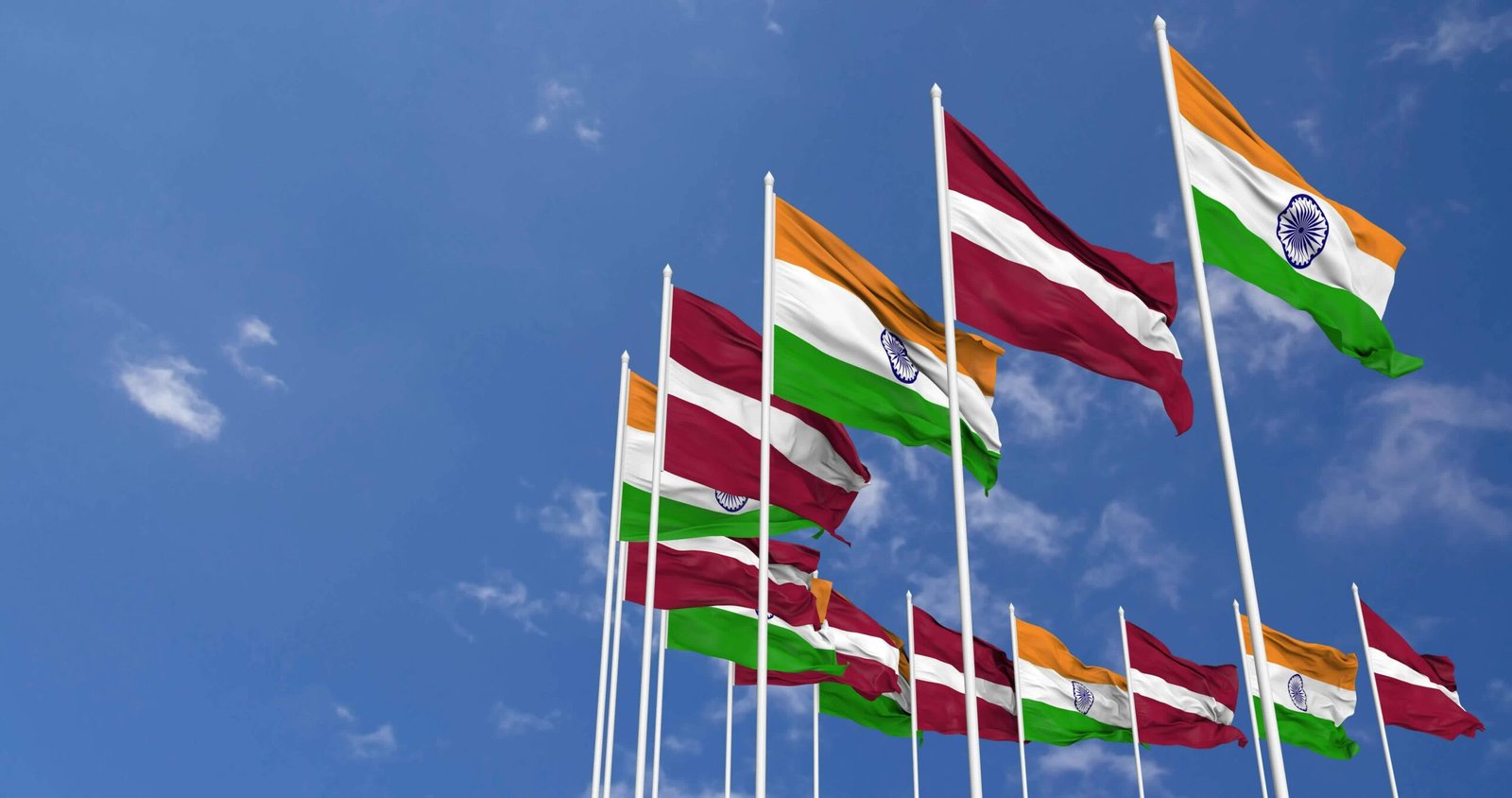
The year 2026 marks the 35th anniversary of diplomatic relations between India and Latvia, highlighting a steady and friendly partnership that has developed since the establishment of formal ties in 1991, following Latvia’s restoration of independence. Over the past three and a half decades, the relationship has grown across political, economic, and cultural dimensions, supported by shared democratic values and a mutual interest in expanding cooperation in Europe and Asia.
India was among the countries that recognized Latvia soon after it regained independence, laying the foundation for strong diplomatic engagement. Since then, both countries have maintained cordial relations, interacting through bilateral visits, institutional dialogue, and
multilateral platforms such as the United Nations. The relationship has gradually expanded beyond traditional diplomacy to include areas such as information technology, education, transport, and innovation. Both sides continue to emphasize the importance of
strengthening ties and identifying new opportunities for collaboration in emerging sectors.
Diplomatic representation has played a key role in advancing bilateral engagement. India established its resident mission in Riga through the Embassy of India in Riga in 2014, marking a significant milestone in enhancing India’s presence in the Baltic region. The
embassy actively promotes political dialogue, trade relations, cultural exchange, and consular services, while also engaging with neighboring countries. Latvia, in turn, maintains its diplomatic presence in India through the Embassy of Latvia in New Delhi, which works to strengthen bilateral cooperation, facilitate business partnerships, and promote Latvia’s economic and cultural interests in India. These missions have become central platforms for fostering closer ties and encouraging exchanges between the two countries.
High-level interactions have contributed to strengthening the partnership. While visits at the highest political level have been limited, there has been consistent engagement through ministerial visits, parliamentary exchanges, and official delegations. These interactions have focused on enhancing cooperation in trade, investment, technology, and education. Participation in international forums has also provided opportunities for leaders and officials from both countries to engage in dialogue and coordinate on issues of mutual interest.
Increasingly, business delegations and sector-specific interactions have complemented diplomatic exchanges, helping to translate political goodwill into practical cooperation.
Trade and economic relations between India and Latvia have shown gradual but steady growth, with considerable scope for expansion. Bilateral trade has diversified over time, with India exporting pharmaceuticals, textiles, machinery, chemicals, and agricultural products to Latvia. In return, Latvia exports wood and wood products, machinery, electrical equipment, and optical instruments to India. Latvia’s strategic location as a gateway to Northern and Eastern Europe provides Indian companies with access to broader European markets through well-developed logistics and transport infrastructure, including ports and rail networks. Conversely, India offers Latvian businesses a large and dynamic market, particularly in sectors such as information technology, food processing, and manufacturing.
Cultural relations form a vibrant aspect of India–Latvia ties, reflecting growing mutual awareness and appreciation of each other’s heritage. Indian culture has gained increasing visibility in Latvia through events such as yoga sessions, classical dance performances, film screenings, and culinary festivals organized by the Embassy of India in Riga. The annual celebration of the International Day of Yoga has become particularly popular, drawing participation from a wide audience and promoting wellness and cultural exchange. Latvian culture, known for its rich traditions in music, art, and literature, has also been showcased in India through exhibitions, performances, and cultural collaborations. These exchanges have strengthened people-to-people connections and enhanced mutual understanding.
Both countries have shown interest in enhancing trade volumes, encouraging investment flows, and promoting joint ventures. Business forums, trade fairs, and institutional cooperation mechanisms have been instrumental in strengthening economic ties.
The film industry has also contributed to cultural engagement between the two countries. Indian cinema, especially Bollywood, has found a niche audience in Latvia, helping to familiarize Latvian audiences with Indian culture, traditions, and storytelling. Latvia’s picturesque landscapes and well-developed filming infrastructure make it an attractive destination for international film production, including potential collaborations with Indian filmmakers. Such engagements not only promote cultural exchange but also open
opportunities for tourism and creative industry partnerships.
The Indian diaspora in Latvia, although relatively small, plays an important role in strengthening bilateral ties. The community consists of professionals, students, and entrepreneurs who contribute to various sectors of the Latvian economy while maintaining strong cultural links with India. Indian students are increasingly choosing Latvia for higher education, particularly in fields such as medicine, engineering, and information technology. Their presence contributes to academic exchange and fosters long-term connections between the two countries. Similarly, Latvian students and scholars engaging with Indian institutions further enhance educational and cultural linkages.
Education and research cooperation represent emerging areas of collaboration. Universities and academic institutions in both countries are exploring partnerships in research, innovation, and student mobility. Latvia’s expertise in areas such as information technology, logistics, and engineering complements India’s strengths in science, technology, and higher education. Academic exchanges, joint research initiatives, and institutional partnerships are expected to play an increasingly important role in the future of bilateral relations.
As India and Latvia celebrate 35 years of diplomatic relations, the partnership continues to evolve with a forward-looking approach. Both countries remain committed to strengthening cooperation across political, economic, and cultural domains while exploring new opportunities in innovation, digital transformation, and sustainable development. The anniversary provides an opportunity to reflect on the progress achieved and to reaffirm a shared vision for deeper engagement, enhanced connectivity, and mutually beneficial
collaboration in the years ahead.