


Blue Economy
Malta has increasingly positioned the blue economy as a strategic pillar of its national development policy. Surrounded by the Mediterranean Sea, the country has strong potential in fisheries, aquaculture, maritime services, and marine biotechnology. The Maltese government has introduced several initiatives to support the development of sustainable fisheries and aquaculture, recognizing the sector as an important contributor to food security and coastal economic activity. According to the Government of Malta and European Union funding programmes, Malta has allocated support through the European Maritime, Fisheries and Aquaculture Fund (EMFAF) for the period 2021–2027, which provides approximately €21.8 million to strengthen fisheries sustainability, improve aquaculture production, and support innovation in marine industries.

Aquaculture has become one of the most significant components of Malta’s blue economy, with production focusing on high-value Mediterranean species such as bluefin tuna, seabream, and amberjack. Modern offshore fish farming technology and strict regulatory standards allow Maltese aquaculture companies to export high-quality seafood to European and international markets. For Indian investors, the blue economy sector offers potential opportunities in seafood processing, marine technology, cold-chain logistics, and aquaculture research. India is one of the world’s largest producers and exporters of seafood, and collaboration with Maltese companies could help Indian firms expand into European seafood markets.
Education
Education has become one of Malta’s fastest-growing sectors, attracting international students due to its English-language academic environment and internationally recognized qualifications. The country’s education system follows the European Qualifications Framework, ensuring compatibility with European academic standards. According to Malta’s Ministry for Education, the country hosts thousands of international students every year, with English serving as the main language of instruction across universities and training institutions.The University of Malta, established in 1592, remains the country’s oldest and largest higher education institution, with more than 11,000 students enrolled in undergraduate and postgraduate programmes.

The university hosts students from over 90 countries and offers courses in areas such as engineering, medicine, information technology, business administration, humanities, and environmental sciences. Private institutions such as IDEA Academy and other international universities contribute to Malta’s growing higher education ecosystem by offering programmes in business management, digital technology, entrepreneurship, and creative industries. Indian students have increasingly shown interest in studying in Malta due to the country’s English-medium education system, relatively affordable tuition costs compared with other European destinations, and opportunities for international academic exposure. For Indian investors, opportunities exist in establishing international education campuses, student housing projects, education technology platforms, and academic partnerships with Maltese institutions. Collaboration between Indian universities and Maltese institutions could also support joint research programmes and student exchange initiatives.
Financial Services
The financial services sector is one of the main pillars of Malta’s economy and has developed into an internationally recognized financial centre within the European Union. According to the Government of Malta, financial services contribute approximately 8–9 percent of the country’s gross domestic product. The sector includes banking, insurance, asset management, investment services, and financial technology. The Malta Financial Services Authority regulates the industry, ensuring compliance with EU financial regulations while maintaining a stable and transparent business environment.

Malta’s membership in the European Union provides financial institutions operating in the country with access to the EU single market. This has attracted international banks, insurance firms, and investment companies seeking a base within the European regulatory framework. In addition to traditional financial services, Malta has also promoted innovation in financial technology and digital financial services. The government has introduced policies aimed at encouraging fintech companies, digital payment platforms, and blockchain-based financial applications.For Indian investors and financial institutions, Malta offers a strategic gateway into the European financial market. Indian fintech companies and financial service providers may establish operations in Malta to expand into Europe while benefiting from the country’s supportive regulatory environment. Collaboration between Indian and Maltese financial institutions could also strengthen innovation in areas such as digital banking, cross-border payment systems, and financial technology development.
Agriculture
Although Malta has limited land resources, agriculture remains an important sector contributing to rural livelihoods, food production, and cultural heritage. Maltese agriculture focuses on products such as vegetables, fruits, olives, wine, and traditional Mediterranean crops. According to government statistics, agricultural land in Malta covers approximately one-third of the country’s total land area, with a significant proportion dedicated to vegetable cultivation and fruit orchards. In recent years, the Maltese government has emphasized sustainable agricultural practices and modernization of farming techniques.
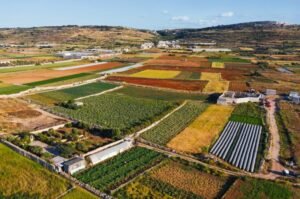
Policies encourage efficient irrigation systems, soil conservation, and environmentally responsible farming methods. Innovative technologies such as hydroponics, greenhouse farming, and vertical agriculture are increasingly being introduced to improve productivity while reducing water consumption. Malta also benefits from European Union agricultural support programmes that provide funding for modernization, research, and sustainable farming initiatives.For Indian investors, the agricultural sector in Malta offers opportunities in agri-technology, food processing, greenhouse farming, and agricultural research. India has significant expertise in agricultural innovation and food production technologies, and collaboration with Maltese agricultural enterprises could support the introduction of advanced farming solutions. Investments in specialty food products, organic agriculture, and Mediterranean food exports could also enable Indian agribusiness companies to access European markets through Malta.
Tourism
Tourism is one of Malta’s most dynamic economic sectors and continues to attract international investment. The country’s historic architecture, Mediterranean climate, coastal landscapes, and cultural heritage make it a popular destination for travellers from around the world. According to Malta’s National Statistics Office, the country welcomed more than 3 million international tourists in recent years, reflecting the continued growth of the tourism industry. Tourism contributes significantly to the Maltese economy through hospitality services, transport, entertainment, and cultural activities.The Maltese government actively promotes tourism development through strategic planning and infrastructure investment aimed at improving visitor experiences while ensuring sustainability.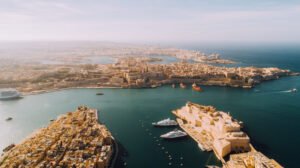
The tourism sector includes luxury resorts, boutique hotels, cruise tourism, conference tourism, wellness tourism, and cultural tourism. Malta has also become a well-known filming location for international movies and television productions, which further enhances its global visibility as a tourism destination.For Indian investors, Malta’s tourism sector presents a range of opportunities. Indian hospitality companies may invest in hotel development, tourism services, and destination management operations. With the growing number of Indian travellers visiting Europe, Malta offers potential for specialized tourism experiences including destination weddings, film tourism, and cultural travel. Indian travel companies could also collaborate with Maltese tourism authorities to promote travel packages targeting Indian tourists.
Infrastructure and Real Estate
Infrastructure development and real estate investment are important drivers of Malta’s economic growth. The country has experienced steady expansion in residential and commercial construction as demand for housing, office space, and tourism infrastructure has increased. According to government economic reports, the construction and real estate sector contributes around 5–6 percent of Malta’s gross domestic product. Urban development projects, including new business districts, residential complexes, and hospitality infrastructure, continue to attract both domestic and international investment.Malta’s real estate market is considered stable and attractive due to its consistent demand and the country’s strategic location within the European Union.
Foreign investors have increasingly shown interest in property investment, particularly in luxury residential developments, waterfront properties, and commercial real estate. Government initiatives aimed at urban regeneration and infrastructure modernization have also created opportunities for international investors to participate in redevelopment projects and smart city initiatives.Indian investors and real estate developers may explore opportunities in residential housing projects, commercial property development, and infrastructure partnerships. Indian construction firms with experience in large-scale urban development projects could collaborate with Maltese developers on infrastructure modernization initiatives. The growth of sectors such as tourism, education, and financial services has also increased demand for student housing, office spaces, and hospitality properties, creating further opportunities for investment.
Pharmaceuticals
The pharmaceutical and life sciences sector in Malta has experienced significant growth over the past two decades. The country has developed a strong reputation as a manufacturing hub for pharmaceutical products, particularly generic medicines and specialized healthcare products. According to the Government of Malta, the pharmaceutical manufacturing industry contributes significantly to Malta’s export sector and employs a growing number of skilled professionals in scientific and technical roles.Malta’s pharmaceutical sector benefits from strict regulatory compliance with European Union standards, enabling companies operating in the country to export medicines throughout the EU.
Several international pharmaceutical companies have established manufacturing facilities in Malta, producing medicines for both European and global markets. Government policies supporting research and development have encouraged collaboration between universities, research institutes, and pharmaceutical manufacturers.Indian pharmaceutical companies may find Malta particularly attractive as a gateway into European markets. India is one of the world’s largest producers of generic medicines, and partnerships with Maltese pharmaceutical manufacturers could facilitate easier access to EU regulatory systems and distribution networks. Indian investors may also explore opportunities in pharmaceutical manufacturing, biotechnology research, and medical technology development in collaboration with Maltese research institutions.
Malta Permanent Residence Programme (MPRP)
The Malta Permanent Residence Programme is one of the country’s key initiatives aimed at attracting foreign investors and strengthening international investment ties. The programme allows non-European Union nationals to obtain permanent residency in Malta through a combination of property investment or rental, government contributions, and a charitable donation to a Maltese non-governmental organization. Applicants must demonstrate financial assets of at least €500,000, of which a minimum of €150,000 must be in financial assets.Applicants are required to either purchase property worth at least €375,000 or lease property with a minimum annual rent requirement, depending on the location.
Additional contributions include a government administrative fee and a donation to an approved Maltese charitable organization. Successful applicants and their families receive permanent residency status and residence cards that allow them to reside in Malta and travel visa-free within the Schengen Area.Indian investors and entrepreneurs have shown growing interest in the Malta Permanent Residence Programme due to its potential benefits for business mobility and European access. Many high-net-worth individuals from India view the programme as an opportunity to establish a presence within the European Union while maintaining global business operations. Residency in Malta also provides access to the country’s high-quality education system, healthcare services, and stable business environment, making it attractive for Indian entrepreneurs seeking international expansion.